
The situation
When Maha died in February 2021, she left behind five children — three sons and two daughters.
She was sixty-eight years old. Her husband had died two years earlier. In the final months of her life, she was frail, in declining health, and almost entirely dependent on her sons for daily care. They lived with her in the family home in Sydney’s southwest. They cooked for her, drove her to medical appointments, and managed her household.
Maha had limited English. She could speak it, but reading and writing were difficult. When it came to documents, she preferred Arabic.
Shortly before her death, one of her sons presented her with a will to sign. He told her it would make sure her wishes were followed. She signed it.
But Maha’s daughters weren’t in the will. They received nothing.
And when the sons tried to have the will admitted to probate, the court said no.
What went wrong
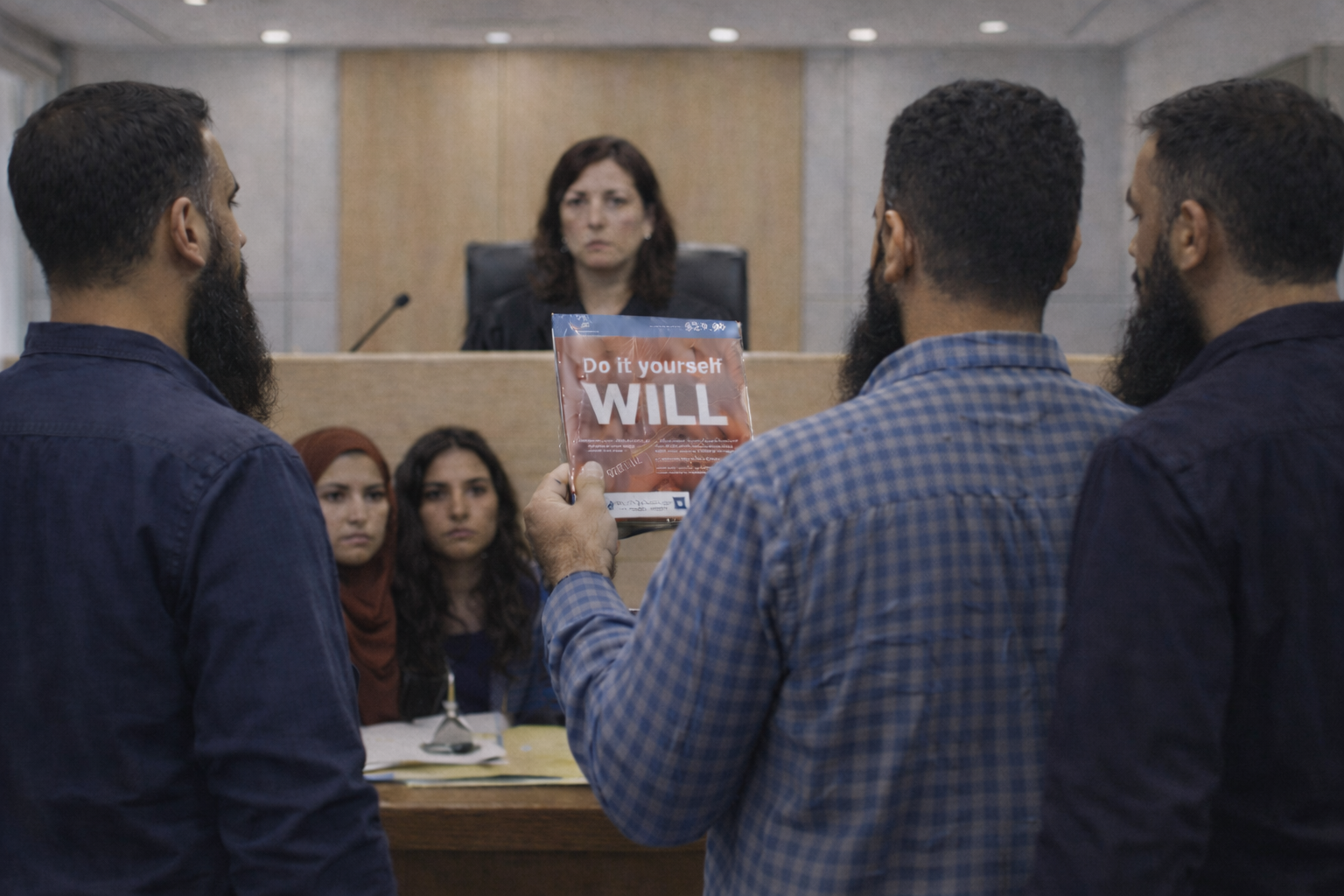
The will had been purchased from eBay. It was a standard DIY kit — the kind that costs thirty dollars and comes with instructions.
One of the sons filled it out himself, in his own handwriting. The will left everything to the three brothers. Their two sisters were excluded entirely.
Two family friends witnessed the signing. The three sons were present in the room.
On the surface, it looked like a valid document. But underneath, almost everything was wrong.
Maha didn’t read the will. She couldn’t — it was in English, and no one read it to her in Arabic. There was evidence she believed she was signing a power of attorney, not a will. She had even spoken to her doctor days earlier about needing a power of attorney, not a will.
The witnesses were close friends of the sons — the very people who stood to benefit. There was no independent person involved. No solicitor. No one to explain what the document meant or to check whether Maha understood what she was giving away.
When the daughters challenged the will, the court asked the witnesses to appear and give evidence. They refused to attend. Their written statements were struck out.
That left the sons to prove the will was valid using only their own testimony. And the judge didn’t believe them.
The impact
The case went to the New South Wales Supreme Court. Justice Rowan Darke examined the evidence carefully.
He found that Maha had the mental capacity to make a will — a doctor had confirmed this days before she signed. But capacity wasn’t the problem.
The problem was that the sons couldn’t prove their mother knew what she was signing.
The judge noted that Maha was frail and vulnerable. She was highly dependent on her sons. She had a very limited ability to read English. The will had been prepared by someone who would benefit from it. And the witnesses — who should have been independent — were friends of the beneficiaries.
There was, the judge said, “no clear reason” why Maha would have wanted to exclude her daughters. The sisters weren’t estranged. They had a normal relationship with their mother.
The sons, he found, had “purposefully downplayed” the relationship between Maha and her daughters.
The outcome
The will was refused.
The court ruled that Maha had died intestate — without a valid will. Under the rules of intestacy, her estate would be divided equally among all five children.
The family home in Punchbowl — the main asset — would now be shared five ways instead of three.
The sons had tried to use a thirty-dollar will kit to secure a property worth hundreds of thousands of dollars. Instead, they ended up with less than they would have received if they had never touched the document at all.
And they ended up in a courtroom, with a judge questioning their honesty and their motives.
What could have helped
This case is a textbook example of what not to do.
Red Flag: Beneficiary Prepared the Will
When someone who stands to inherit writes the document themselves, courts treat it as "suspicious circumstances." The burden of proof shifts to those trying to uphold the will.
Use a solicitor. A lawyer would have ensured the will was properly drafted, explained, and witnessed. They would have asked whether Maha understood her choices — and documented her answers.
Never let a beneficiary prepare the will. When someone who stands to inherit writes the document, it raises immediate suspicion. Courts call these “suspicious circumstances,” and they shift the burden of proof onto the people trying to uphold the will.
Use independent witnesses. Witnesses should have no connection to the beneficiaries. Friends of the family are not independent — especially when they’re friends of the people inheriting everything.
Ensure the will-maker understands the document. If someone has limited English, the will should be read to them in their own language. Their understanding should be confirmed and recorded.
Keep records. A solicitor’s file note is evidence. A conversation in a living room is not.
Why this matters
DIY will kits are marketed as simple and affordable. And for some people, in some circumstances, they can work.
But they come with risks that most people don’t fully appreciate until it’s too late.
A will is a legal document. It must be signed correctly, witnessed correctly, and — crucially — the person making it must understand what they’re signing. If any of these elements are missing or in doubt, the will can be challenged. And if it’s challenged successfully, everything falls apart.
In this case, a family that might have grieved together instead ended up in court. The sons’ attempt to exclude their sisters backfired. The estate was divided equally — but the relationships may never recover.
The cost of a professionally prepared will is a few hundred dollars. The cost of getting it wrong can be measured in years of litigation, tens of thousands in legal fees, and a family torn apart.
Related topics
- Probate
- Intestacy
- Witness
- Testamentary Capacity
- Knowledge and Approval
- What makes a will valid?
Based on Wehbe v Giotopoulos [2023] NSWSC 827. Names have been changed.