
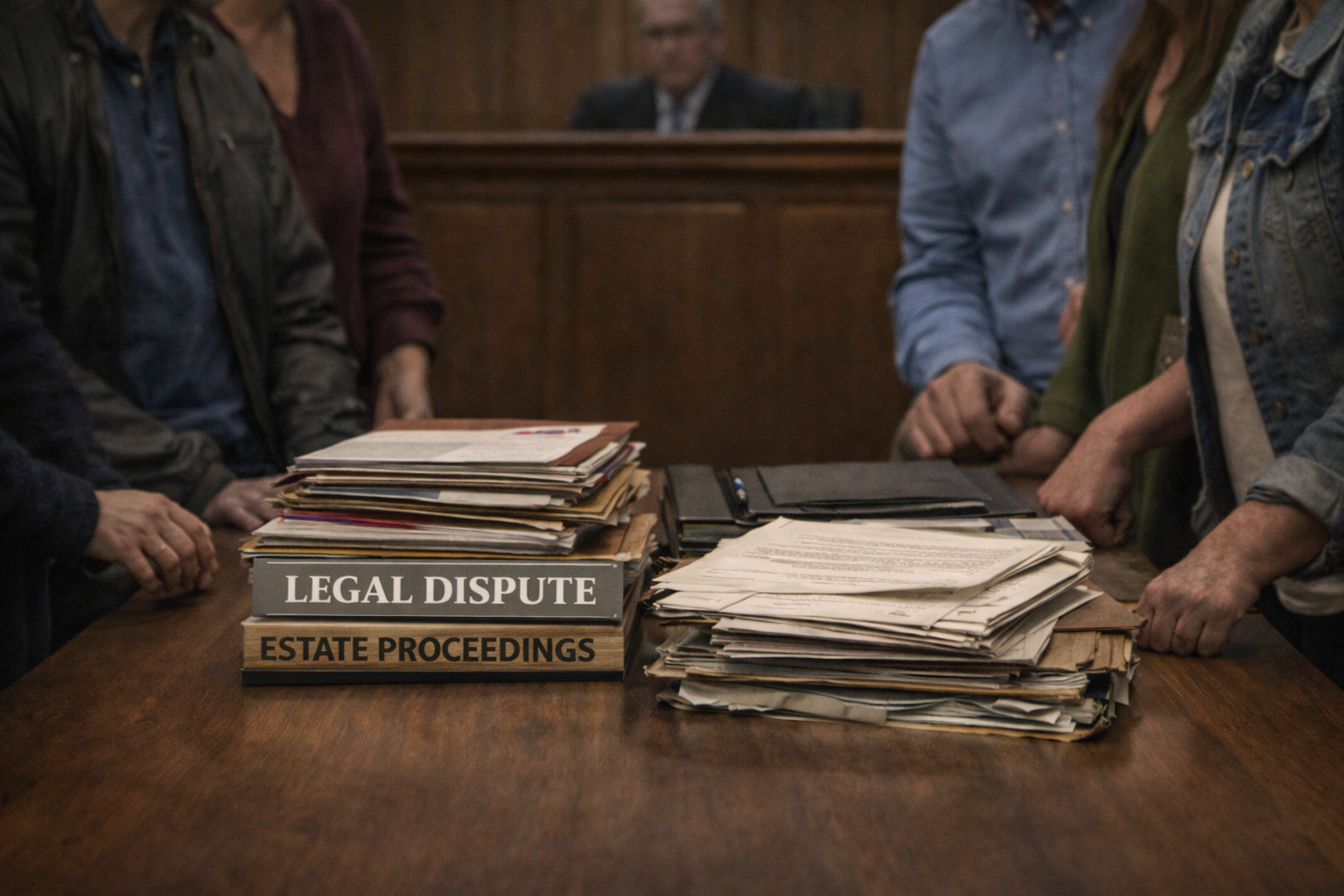
A Family Left in Limbo
Jean and Alexander Fernandez were married for decades. They raised five children in London — Julian, Leessa, Nick, Vanessa, and one other sibling. Like many families, they assumed everything would sort itself out when the time came.
When Alexander died in 2013, three years after Jean’s death in 2010, the children faced an unexpected problem: there appeared to be no wills. Both parents had seemingly died intestate.
Two of the children — Leessa and Nick — stepped forward to handle their mother’s estate. They obtained letters of administration in 2013, the legal authority needed when someone dies without a will. Jean’s estate included a valuable flat in Courtfield Road, South Kensington, where their sister Vanessa was living.
The parents had also established a discretionary trust in 2008 for the benefit of their children. With no apparent wills, the path forward seemed clear, if complicated.
Then everything changed.
"The discovery of two homemade wills, years after both parents had died, transformed a difficult situation into a decade-long nightmare."
The Discovery That Divided Them
In 2015 — two years after Alexander’s death and five years after Jean’s — Julian found something unexpected: a homemade will his father had written in 1996. It appointed Jean and Julian as executors and left everything to Jean.
Julian obtained a grant of probate in January 2016. He was now his father’s executor.
Three years later, in February 2018, Julian made another discovery: a matching homemade will from Jean, also dated 1996. It appointed Alexander and Julian as executors, with everything left to Alexander.
With both parents now deceased, the structure of these wills meant that Julian — and only Julian — had legal authority over both estates.
In July 2018, Julian issued legal proceedings to revoke the letters of administration that Leessa and Nick had been granted years earlier. He wanted full control.
The Battle for Control
Leessa and Nick didn’t accept Julian’s claim without challenge. They demanded proof that Jean’s 1996 will was valid. Homemade wills — written without legal guidance — are notoriously vulnerable to challenge. Was the signature genuine? Were the witnesses appropriate? Did Jean have mental capacity at the time?
A preliminary trial was held in 2019. The court ruled that Jean’s will was valid.
The letters of administration were revoked. Julian obtained full probate of both parents’ estates. He also appointed himself and a friend as trustees of the 2008 family trust.
One sibling now controlled everything: both estates and the family trust. His four siblings were beneficiaries entirely dependent on his decisions.
The Danger of Concentrated Control
When one person has sole authority as executor of multiple estates AND trustee of a family trust, there are no checks and balances. The other beneficiaries have no practical power — except to go to court.
What the Siblings Alleged
The relationship between Julian and his siblings deteriorated rapidly. According to court documents, Leessa and Nick raised serious concerns about Julian’s conduct as executor:
Inconsistent accounts. They claimed Julian provided materially inaccurate and inconsistent information about their father’s estate. Numbers didn’t add up. Explanations changed.
Conflicts of interest. Vanessa was living in the London flat that formed part of the estate. Julian, they alleged, intended to let her remain there indefinitely rather than selling the property and distributing the proceeds. As both executor and beneficiary, his interests were potentially at odds with theirs.
Lack of transparency. Updates were sparse. Requests for information went unanswered. The siblings claimed Julian was hostile, secretive, and unfair in his dealings with them.
Unauthorised payments. They alleged Julian had received sums from the estate without proper authorisation and had misapplied assets for his own benefit.
Extraordinary delay. More than a decade after Jean’s death, her estate remained unadministered.
Julian denied wrongdoing. He maintained he was fulfilling his duties as executor appropriately.
"Personal hostility was placing significant hurdles in the way of finalising the administration."
— District Judge Wales, 2024The Legal Battle
What followed was years of legal proceedings that consumed the family’s resources and relationships.
The counterclaim filed by Leessa and Nick sought Julian’s removal as executor and trustee. Directions were given in 2023 for a four-day trial to resolve the disputed facts. The family was heading for a full courtroom confrontation.
But in March 2024, Leessa and Nick made a different application: they asked the court to remove Julian summarily, without a full trial.
In September 2024 — more than fourteen years after Jean’s death — District Judge Wales heard their application in a single day.
Jean Dies
Apparently intestate. No will is found.
Alexander Dies
Also apparently intestate. Leessa and Nick obtain letters of administration for Jean's estate.
Wills Discovered
Julian finds homemade wills from both parents, dated 1996. Legal battle begins.
Julian Gains Control
Court validates the wills. Julian becomes sole executor of both estates and trustee of family trust.
Years of Conflict
Siblings allege misconduct. Communication breaks down completely. Legal fees mount.
Julian Removed
Court removes Julian as executor and trustee. Independent professionals appointed. Julian ordered to pay costs.
The Court’s Decision
District Judge Wales didn’t need to determine whether Julian had actually committed misconduct. Under English law, the test for removing an executor isn’t about punishment — it’s about whether the estate can be properly administered.
The judge found that the administration had become unworkable. Personal hostility between Julian and his siblings was creating significant obstacles. The delays were extraordinary. The conflicts of interest were concerning, even if not proven to be actual breaches of duty.
The ruling was decisive:
- Julian was removed as executor of both parents’ estates
- Julian was removed as trustee of the 2008 family trust
- Anyone Julian had appointed as trustee was also removed
- Independent professionals would take over
- Julian lost his right to recover his legal costs from the estates
- Julian was ordered to pay his siblings’ legal costs on an indemnity basis
Julian appealed. In 2025, the High Court upheld the decision. HHJ Matthews confirmed that courts have wide discretion to remove executors when the welfare of beneficiaries requires it — even without proof of wrongdoing.
The Legal Principle
An executor can be removed not because they've done something wrong, but because the estate cannot be administered effectively while they remain in office. The welfare of beneficiaries is paramount.
The Real Cost
By the time the courts intervened, Jean had been dead for fourteen years. Her estate — including a valuable London flat — remained unadministered.
The financial cost was enormous. Years of legal proceedings. Multiple hearings. Appeals. Both sides incurred substantial fees, with Julian ultimately ordered to pay not just his own costs but his siblings’ as well.
But the human cost was greater. Five siblings who once shared a childhood now communicated only through lawyers. Family gatherings had become impossible. The trust their parents had placed in one child to look after the others had produced the opposite result.
"This case is a striking reminder that the court's jurisdiction to remove personal representatives is very flexible. The best interests of the beneficiaries can justify removal without any mismanagement or misconduct."
— Legal analysis of the caseWhat This Family Could Have Done Differently
Jean and Alexander likely believed their homemade wills would protect their children. Instead, those wills — discovered years late, appointing only one executor — created the conditions for disaster.
1. Professional Will Preparation
Homemade wills are risky. They’re more likely to be challenged, more likely to contain errors, and more likely to create problems that professional drafting would prevent. The cost of a proper will is trivial compared to years of litigation.
2. Multiple Executors
Appointing a sole executor concentrates all power in one person. Co-executors must act together, creating natural accountability. If Jean and Alexander had named two or three children, no single sibling could have controlled everything.
3. Professional Executor or Trustee
For complex estates — or families with any hint of tension — a professional executor (solicitor, accountant, or trust company) provides neutrality. They have no personal interest in the outcome and no family history to complicate decisions.
4. Clear Communication
The siblings apparently didn’t know these wills existed until years after both parents died. Clear communication about estate plans — even if the details remain private — prevents the chaos of unexpected discoveries.
5. Regular Will Reviews
A will from 1996 reflected circumstances nearly three decades old. Regular reviews ensure your will matches your current situation and relationships.
The Lesson
Jean and Alexander Fernandez wanted to provide for their five children. They created a trust. They wrote wills. They tried to do the right thing.
But homemade wills hidden away for decades, a single executor with unchecked authority, and no mechanism for accountability turned their good intentions into a family catastrophe.
More than fourteen years after Jean’s death, independent professionals are finally administering her estate. The siblings who fought in court may never reconcile. The legal costs consumed resources that should have gone to the next generation.
Estate planning isn’t just about documents. It’s about understanding how power, money, and family dynamics interact — and building in safeguards before problems arise.
Related Topics
- Executor
- Fiduciary Duty
- Letters of Administration
- Probate Delays
- Who should I choose as my executor?
- Can an executor be removed?
Based on Fernandez v Fernandez [2025] EWHC 2373 (Ch). This case summary is for educational purposes only and does not constitute legal advice.